Blog
Blog
August 10, 2026
Edge banding thickness ranges from 0.4mm to 3mm, with each size serving specific durability, aesthetic, and functional needs. Thin tapes (0.4mm–1mm) suit minimalist or low-wear areas, medium thicknesses (1mm–2mm) offer general-purpose protection, and thick profiles (2mm–3mm) provide maximum impact resistance for commercial or high-traffic furniture. Choosing the wrong edge banding thickness is one of the most expensive and avoidable mistakes in furniture manufacturing — too thin and edges chip under daily use; too thick and material costs rise while processing slows. This comprehensive guide from Chimeda (Shijiazhuang Qimeida Rubber Material Products Co., Ltd., ISO9001 certified, EU AIDIMME tested) covers every standard thickness from 0.4mm to 3mm across PVC, ABS, PP, and Acrylic materials. For each thickness tier, you will find: recommended furniture types, panel thickness compatibility, minimum bending radius, machine requirements, durability rating, relative cost, and a full Scenario Adaptation Comparison table matching thickness to real-world applications (kitchens, bathrooms, offices, retail, healthcare, children's furniture). The guide also includes authentic user word-of-mouth evaluations from furniture manufacturers and distributors who switched to the correct thickness, and ends with a decision matrix to help B2B buyers and furniture factories specify the right thickness in under 3 minutes.
Furniture buyers judge quality in seconds — and the first place their hand lands is the edge. A well-finished edge communicates premium craftsmanship; a chipped, peeling, or visibly thin edge destroys trust in the entire piece. Thickness is the single most influential specification in edge banding performance, yet it is often treated as an afterthought during procurement.
Chimeda has been a professional edge banding and weather strip manufacturer for over a decade. Our edge banding products span PVC, ABS, PP, and Acrylic materials, available in thicknesses from 0.4mm to 3mm and widths from 6mm to 630mm. We use BAERLOCHER stabilizers, JOWAT back glue, DuPont ink, and BASF toner to ensure every roll meets ISO9001, EU AIDIMME, and EU ROHS standards. Our strategic supply partnerships with Vanke, Country Garden, and first-line furniture brands have given us unmatched insight into how thickness decisions play out in real mass production — from factory floor to end-user home.
Edge banding thickness is not an arbitrary number. It directly governs three outcomes that determine whether a furniture piece succeeds or fails in the market:
Protection: Thicker banding provides greater impact resistance, moisture sealing, and edge durability. Thin banding (≤0.6mm) offers basic sealing but minimal impact absorption. For every 0.5mm increase above 1mm, impact resistance improves by approximately 40–60%.
Aesthetics: Thickness determines the edge profile — thin banding produces a crisp, nearly invisible joint; thick banding creates a visible, premium rounded edge. The customer's tactile experience is shaped by thickness before they consciously notice it.
Processability: Thinner banding (<0.6mm) requires precise board edge preparation and may not feed reliably on high-speed automatic edge banders. Thicker banding (≥2mm) may require heavy-duty trimming tools and slower feed rates.
Edge banding thickness should be at least 1/30 of the panel thickness. For a standard 18mm board, that means 0.6mm minimum — so 1mm is the universally safe choice. For 25mm panels, 1mm minimum; 1.5mm recommended. For 38mm+ thick worktops and countertops, 2–3mm is standard.
| Thickness | Material Options | Panel Thickness | Min. Bending Radius | Edge Bander Type | Impact Resistance | Relative Cost/m |
|---|---|---|---|---|---|---|
| 0.4mm | PVC, PP | 3–18mm | 5mm | Standard / Manual | ★★☆☆☆ | $ (baseline) |
| 0.5–0.6mm | PVC, PP, ABS | 6–18mm | 8mm | Standard automatic | ★★★☆☆ | $ |
| 0.8mm | PVC, ABS, PP | 12–25mm | 12mm | Standard automatic | ★★★☆☆ | $$ |
| 1.0mm | PVC, ABS, PP, Acrylic | 15–25mm | 15mm | Standard automatic | ★★★★☆ | $$ |
| 1.5mm | PVC, ABS, Acrylic | 18–28mm | 20mm | Standard / Heavy-duty | ★★★★☆ | $$$ |
| 2.0mm | PVC, ABS, Acrylic | 18–38mm | 30mm | Heavy-duty | ★★★★★ | $$$ |
| 3.0mm | PVC, ABS | 25–50mm+ | 50mm | Heavy-duty / post-form | ★★★★★ | $$$$ |
Edge banding width must be 2–3mm wider than the panel thickness. For an 18mm board, use 20–21mm wide banding. For a 25mm board, use 27–28mm. This extra width is consumed during the trimming process — cutting it to exact panel thickness produces a perfectly flush edge. Ordering banding at the exact panel thickness guarantees exposed raw edges after trimming.
Best for: RTA (ready-to-assemble) flat-pack furniture, interior cabinet backs and bottoms, fixed shelving, drawer interiors, bookcase shelves, high-volume low-cost production.
This is the highest-volume thickness range globally, driving the majority of flat-pack furniture production in Europe, the US, and Southeast Asia. At 0.4–0.6mm, PVC edge banding is extremely flexible (bending radius down to 5mm), making it ideal for tight-radius curved edges. The trade-off is impact resistance — a 0.4mm edge will chip if struck with moderate force, so it should never be used on door fronts, drawer faces, or any edge the customer will handle frequently.
Chimeda recommendation: Even at the economy tier, insist on co-extruded (co-ex) PVC rather than plain single-layer PVC. The co-ex surface layer provides measurably better scratch resistance and deeper color on wood-grain patterns — a quality difference that costs less than 5% more per meter but dramatically reduces customer complaints about edge wear.
Best for: Kitchen cabinet doors and drawer fronts, bedroom wardrobes, office desks and storage units, hotel and contract furniture, bathroom vanities — essentially any visible edge that will be touched regularly.
1.0mm is the default thickness for the majority of cabinet, kitchen, and bedroom furniture manufacturers worldwide. It strikes the ideal balance: thick enough for excellent impact resistance and a clean trimmed edge, thin enough to remain cost-competitive and compatible with virtually every automatic edge bander on the market. At 1.0mm, the trimmed edge produces a crisp, near-seamless joint that looks premium without requiring specialized tooling.
Chimeda recommendation: For kitchen cabinets in humid climates, always use 1.0mm minimum with PUR hot melt adhesive. The thicker banding seals the particleboard/MDF edge more completely, preventing the moisture ingress that causes swelling and delamination — the #1 cause of kitchen cabinet warranty claims.
Best for: Premium kitchen lower cabinets, bathroom vanities, children's bedroom furniture, office reception desks, healthcare furniture, and any application where corner impacts are frequent.
The jump from 1.0mm to 1.5mm delivers a visibly richer edge profile — the slightly rounded edge after trimming feels more substantial under the hand, which subconsciously signals higher quality. The practical durability gain is significant: corner impact resistance improves by approximately 40–50% compared to 1.0mm. For manufacturers positioning products in the mid-to-premium segment, the incremental material cost (~15–25% over 1.0mm) is recovered through reduced after-sales edge damage claims and a higher perceived product value.
Chimeda recommendation: 1.5mm is the ideal specification for handleless kitchen designs, where users grip cabinet edges directly to open doors. The thicker edge withstands repeated fingernail and ring contact without developing visible wear marks.
Best for: High-end kitchen worktops, retail store shelving and displays, hospitality furniture (hotels, restaurants), commercial office desking systems, and premium residential cabinetry.
At 2.0mm, edge banding transitions from "finishing material" to structural edge protection. It can withstand daily impact from shopping carts, luggage, cleaning equipment, and constant handling without chipping. 2.0mm also enables post-forming — the edge can be routed to create rounded, beveled, or profiled edge shapes that thinner banding cannot support.
Chimeda recommendation: 2.0mm is also the minimum for ABS edge banding in healthcare and laboratory furniture, where chemical resistance and impact durability are non-negotiable. Chimeda's ABS 2.0mm edge banding meets EU ROHS and REACH standards for these demanding environments.
Best for: Laboratory workbenches, industrial tabletops, heavy-traffic retail checkouts, architectural paneling, post-formed countertops, and any surface subject to extreme daily wear.
3.0mm is the thickest standard edge banding — it is effectively a protective rail for the panel edge. It requires heavy-duty edge banding machines with specialized trimming and profiling tools, and production speed is typically 30–50% slower than with 1.0–2.0mm banding. The result, however, is maximum impact absorption and a substantial architectural edge profile that cannot be achieved with thinner materials.
The same 18mm MDF panel needs different edge banding thicknesses depending on where and how it is used. This comparison table maps every major furniture scenario to the optimal thickness — and explains why.
| Scenario | Recommended Thickness | Material Choice | Key Reason | Adhesive Type |
|---|---|---|---|---|
| Flat-pack / RTA Economy Furniture | 0.4–0.6mm | PVC (co-ex) | Lowest cost, fastest production, edges rarely handled | EVA |
| Residential Wardrobe Interiors | 0.5–0.8mm | PVC / PP | Hidden interior edges, hanger contact only | EVA |
| Office Desk Tops & Shelving | 0.8–1.0mm | PVC / ABS | Moderate daily contact, professional appearance required | EVA |
| Standard Kitchen Cabinets (Dry) | 1.0mm | PVC / ABS | Frequent handling, visible edges, moisture adjacent | PUR |
| Bathroom Vanities (Wet Zone) | 1.0–1.5mm | PVC / ABS | High humidity, condensation exposure, daily use | PUR only |
| Children's Bedroom Furniture | 1.5mm | ABS (preferred) / PVC | Impact-prone, safety-critical, frequent corner knocks | PUR |
| Handleless Kitchen Designs | 1.5mm | PVC / Acrylic | Edge is the handle — direct fingernail grip contact | PUR |
| Luxury Residential Cabinetry | 1.5–2.0mm | Acrylic / ABS | Premium feel, 3D depth, near-invisible joints | PUR / Laser |
| Hotel / Hospitality Furniture | 2.0mm | ABS / PVC | High-traffic, luggage impact, daily housekeeping | PUR |
| Retail Store Shelving & Displays | 2.0mm | ABS | Shopping cart impact, constant rearrangement, public use | PUR |
| Healthcare / Laboratory Furniture | 2.0mm | ABS | Chemical resistance, impact, hygiene standards (ROHS/REACH) | PUR |
| Kitchen Worktops / Countertops | 2.0–3.0mm | PVC / ABS | Post-formed edge, water splash, heavy daily use | PUR |
| Industrial Workbenches & Lab Tables | 3.0mm | ABS | Extreme daily wear, chemical exposure, structural protection | PUR |
A single kitchen project may need two or three thicknesses: 1.5mm on door fronts and visible drawer faces, 0.6mm on interior cabinet backs and fixed shelves, and 2.0mm on countertop edges. Using the same thickness everywhere either over-spends on hidden edges or under-protects visible ones. Smart manufacturers specify thickness by sub-component, not by project.
Define the usage environment: Dry interior → 0.4–1.0mm. Humid/wet → 1.0mm minimum + PUR adhesive. High-impact/commercial → 2.0–3.0mm.
Identify visible vs hidden edges: Door fronts and drawer faces → 1.0mm+. Cabinet backs and interiors → 0.4–0.6mm. Countertops → 2.0–3.0mm.
Check panel thickness: Apply the 1/30 rule. 18mm board → 0.6mm minimum, 1.0mm safe. 25mm board → 1.0mm minimum, 1.5mm recommended.
Verify machine compatibility: Standard automatic edge banders handle 0.4–2.0mm. Heavy-duty machines needed for 3.0mm. Laser edge banders require 0.4mm laser-specific tape.
Consider post-processing needs: If the edge will be routed, profiled, or sanded after application → 2.0mm minimum to avoid cutting through to the substrate.
0.4mm — PVC, PP (co-ex and standard) | 0.5–0.6mm — PVC, PP, ABS | 0.8mm — PVC, ABS, PP | 1.0mm — PVC, ABS, PP, Acrylic | 1.5mm — PVC, ABS, Acrylic | 2.0mm — PVC, ABS, Acrylic | 3.0mm — PVC, ABS. Width range: 6mm–630mm (custom available). Roll lengths: 100m, 200m, 300m. All thicknesses available with solid color, wood grain, marble, cloth grain, super matte, and high gloss surface effects.
Thickness selection is the single most frequent question from Chimeda's B2B customers — from RTA flat-pack factories to luxury kitchen manufacturers. This guide maps every thickness tier to real project scenarios based on actual customer purchasing data and technical consultation records.
All recommendations reflect 2026 edge banding machine technology (laser, PUR, EVA), current material formulations, and the latest furniture design trends including handleless kitchens, super matte finishes, and anti-fingerprint surfaces.
Chimeda manufactures edge banding under ISO9001 quality management with products that have passed EU AIDIMME testing and meet EU ROHS environmental standards. Raw materials sourced from BAERLOCHER, JOWAT, DuPont, and BASF — four of the most respected chemical/material brands in the industry.
Chimeda edge banding products are specified in projects by two of China's largest real estate developers — Vanke and Country Garden — as well as numerous first-line furniture brands. This real-world volume deployment across millions of residential units validates the performance data in this guide.
This guide is structured for speed: a specification table at the top, a scenario comparison matrix in the middle, a 5-step decision framework, and real user reviews that validate the recommendations. A procurement manager or production engineer can find the right thickness for their project in under 3 minutes.
Chimeda provides free sample kits with your choice of thicknesses (0.4mm–3.0mm), materials (PVC, ABS, PP, Acrylic), and surface finishes. Test on your own edge bander, with your own panels, in your own production environment — before placing a bulk order. Custom widths, colors, and OEM packaging available. MOQ starts at 500 meters per SKU.
Request Free Thickness Sample Kit →Email: info@qimeida.cn | Web: www.chimeda.com


August 10, 2026
Edge Banding Thickness Guide: 0.4mm to 3mm
August 10, 2026
Tips for Applying Edge Banding Without Peeling
August 10, 2026
Why PVC Door Bottom Seals Improve Soundproofing
August 10, 2026
PP Edge Banding Product Review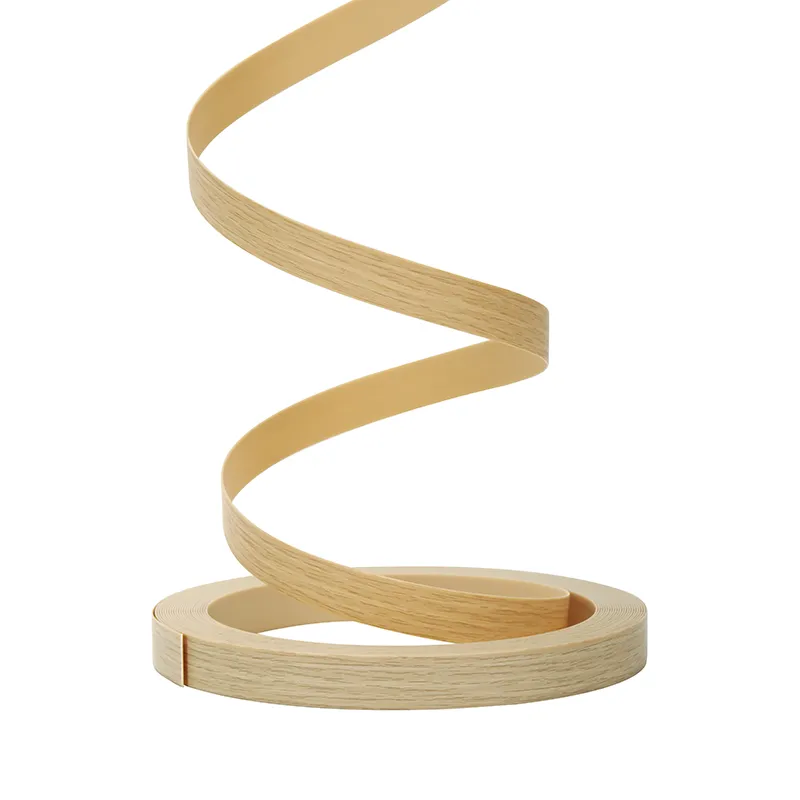
August 10, 2026
Table PVC Edge Banding Benefits for Daily Use Furniture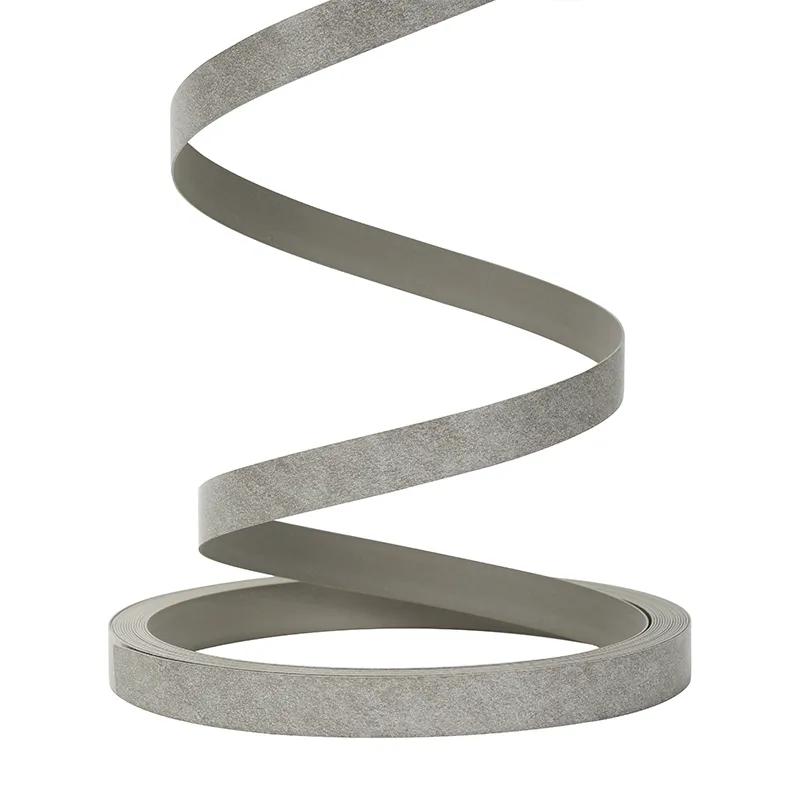
August 10, 2026
High Gloss Edge Banding vs Matte Edge Banding: What’s the Difference?
August 07, 2026
PVC Edge Banding vs Melamine Edge Banding
August 07, 2026
Tips for Processing ABS Edge Banding
August 07, 2026
PVC Door Bottom Seal Buying Guide
August 07, 2026
Cabinet PVC Edge Banding Applications in Kitchen Design